Monthly Archive for August, 2008
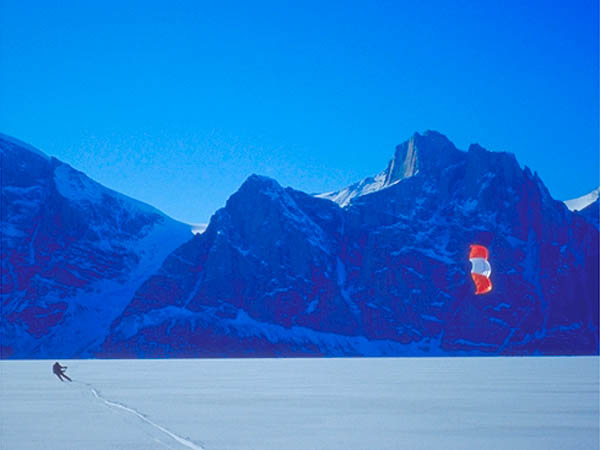
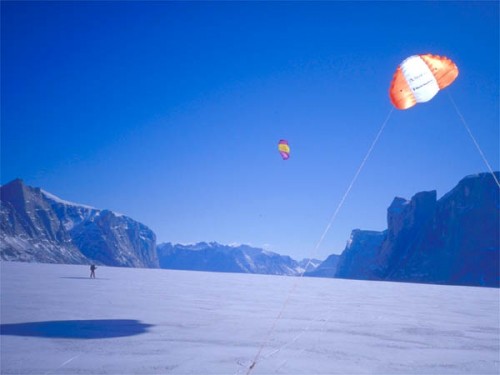
Sunday Photo - Midnight Kiting in Sam Ford Fjord

Expeditions can be a ton of hard work and heavy hauling. A friend once described this as “the blue-collar” part of the sport, which I often think about when I’m crushed with a heavy load.

Full-speed ahead in the Sam Ford Fjord area of Baffin Island, right near Swiss Bay.

This photo was taken during one of the moments when we dumped all of our heavy gear, stripped down to nothing more than skis and a kite (well, and clothes, it was cold) and went out for a mega kiting session just for the fun of it. Baffin Island is way up north in the Arctic Circle where it stays light 24 hours a day at this time of year. This photo was taken after we had eaten dinner and were getting ready to sleep, but the wind and snow conditions were so perfect that we went out for a midnight kiting session I’ll never forget.

________________________________
Help support StraightChuter.com and stay warm & toasty in a Baffin Island proven Mountain Hardwear Sub Zero SL Hooded Down Jacket at Backcountry.com! click on the photo below…

Photo Gallery - 2002 Baffin Island

I’m slowly organizing my photo galleries and just got around to adding one of my all time favorite trips to StraightChuter.com - Baffin Island 2002. This was a great trip in a lot of ways. For one, we had no idea what to expect for skiing, and it turned out to be some of the best couloirs ever. We were also experiementing with kites (theme of the moment) and they worked out perfectly. Plus, I had a great time with Brad, the scenery blew me away and it was a special treat/honor to meet the Inuits, both in Clyde River and out on The Land.

________________________________
Help support StraightChuter.com and stay warm & toasty in a Baffin Island proven Mountain Hardwear Wraith -20 Degree Down Sleeping Bag at Backcountry.com! Click on the photo below…

Powered Up - Build Your Own NASA Wing Kite

Few topics on earth get people more fired than debating which snow kite is the best.  I should know, as for years I was NASA wing evangelist and still am to a large degree.  DEATH BEFORE FOIL KITES.  Yeah, well, then I tried an Ozone foil, and, uhmmm, well, it was totally bitchin’.  And so were the inflatables.  Kiters are passionate about their sport and a large part of your kiting preference depends on what you learned on and what kind of kiting you like to do.  As with backcountry skiing, the sport has many avenues ranging from strictly transportation across ice caps to floating monster air across road gaps.  Kiting is a quiver sport.
 
Using kites for Big Game chute hunting in Baffin Island.
Using NASA Wing kites for Big Game chute hunting in Baffin Island.

I learned how to kite on a NASA wing in Antarctica and couldn’t wait to get home and sew up a few kites on my own.  Since then I’ve made roughly 20 NASA wings ranging from 2.3m speed demons to 30m monster trucks.   My quiver has expanded into foil kites and hopefully an inflatable for next season, but for expeditions, NASA wings are still my workhorse of choice as they are light, simple, cheap and generate a huge amount of power.

I’ve resurrected an old “How to Build a NASA Wing” website which I just moved over to StraightChuter.com. Click here to see how it is done.

NASA wing kites - small enough to fit in your pocket, yet strong enough to rip your arms off.

 ________________________________
Help support StraightChuter.com and get boosted into the stratosphere with a Best Kiteboarding Yarga Kite on sale now at Backcountry.com! click on the photo below…

The Theory of Relativity & Safety

A Dawn Patrol trip up the South Ridge of Mt. Superior this morning reminded me of an sobering lesson from 2002.

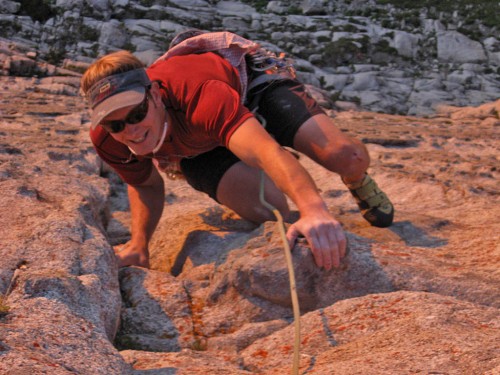
The first time I ventured up this ridge, I read about it in the local guidebook and brought along a rope and rock climbing equipment.  The ridge turned out to be so straightforward and moderate that I never used any gear and subsequently did it many more times with increasingly less and less equipment until it had become a race track.  There were plenty of willing partners and the faster we got, the easier it seemed.  At one point someone asked how hard it was and I remember saying that it had some exposure, but you’d have to try to hurt yourself if you fell.


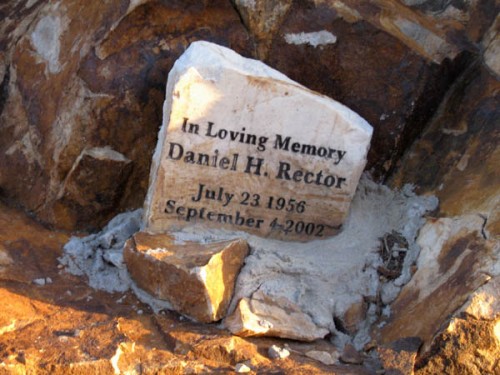
On September 4th, 2002, I was proved wrong on this theory when a close friend, Dan Rector, slipped and fell to his death.  Dan was about 100′ feet behind on an exposed ridge just as the sun was coming up when I heard him say “whooah…” and then tumble off the ridge.  I’ll never know if it was loose rock, missed handhold or an untied shoelace, but the underlying premise was that we had become inured to the danger and exposure to the point where we considered it safe, easy ground, which in reality it is not.

Courtney Phiilips (followed by Matthew Turley) at the point where Dan fell.
Courtney Phillips (followed by Matthew Turley) at the point where Dan fell. It seemed safe at the time.

In terms of skiing, the same thing happens.  The longest fall I’ve ever taken took place on a run which I’d skied so many times it seemed boring and I let my guard down.  Five-hundred vertical feet later, I was amazed to be alive and had a new perspective on “safe” terrain.  More than any single run, it changed the way I ski.  The lesson I took away from this is that at times, under-rating moderate terrain can be far more dangerous than being fully engaged when the dangers are obvious.

Any similar experiences?

________________________________
Help support StraightChuter.com and get my lightweight helmet of choice, the Black Diamond Tracer on sale now at Backcountry.com!  Click on the photo below…

Click & Chute - The Perils of Web Based Skiing

When I published “The Chuting Gallery - A Guide to Steep Skiing in the Wasatch Mountains” in 1998, I was told by a few well meaning Pros that I was going to have the blood of countless sixteen year-old kids on my hands as they all rushed out to try skiing steep lines and died in avalanches or cartwheeling down slopes.  Thankfully, this hasn’t happened.  I think a major reason this hasn’t happened is that it is one thing to know where a steep line is, yet another to know when and how to actually ski it.  Skiing a steep avalanche prone slope always sounds better the night before over a few hot Postums (hey, this is Utah…) then it does when you are post-holing your way up deep snow, getting lost or carrying crusher loads.  In many ways, the difficulties of steep ski mountaineering make it self limiting and reduce many of the potential accidents.

But then came the internet.

Stan Brown goin' down "Roman's" in Wolverine Cirque.  This used to get skied a few times per year and now gets skied multiple times per day when it is in shape.
Stan Brown goin’ down “Roman’s” in Wolverine Cirque. This used to get skied a few times per year and now gets skied multiple times per day when it is in shape.

Nowadays when a steep line is skied, it is often national knowledge within an hour of it being skied, and once “the booter is in” it may get skied many times in quick succession.  This phenomenon is becoming very common in Europe, and closer to home, a classic example is the East Face of Pyramid Peak which went unrepeated for 20+ years, then saw a rapid succession of descents last year once word got out that the booter was in and it was stable.

This is both good and bad.  Part of learning how to ski mountaineer is literally following in the footsteps of others, yet at the same time, conditions on steep slopes can radically change within just a few hours and what was safe yesterday might be dangerous today.  I’m a big proponent of self responsibility (and trip reports) and hope that people realize that a booter and ski tracks don’t necessarily mean a slope is good to go.

Comments?
________________________________
To help support StraightChuter.com and get a screaming deal on my favorite beacon, the Pieps DSP from Backcountry.com, click the photo below…

Chuting Spree Contest. Clue #1 for K2 Telemark/AT Skis

Follow five weekly clues and be the first to correctly identify where the skis are hidden to win a pair of K2 Telemark/AT skis of your choice.

Click here for the contest rules.

Clue #1

Q: Although the true high point of this CONTINENT is 16,024 feet, it is seldom if ever skied.

Sept 2nd - Identify a State, Country or Province on this continent.
Sept 9th - Identify a Mountain Range, Zone or City
Sept 16th - Identify a specific Mountain
Sept 23rd (SUPER CLUESDAY!) Identify the exact spot where the skis are located and send in your answer.

_________________________________________________

Featured ski - K2 Mt. Baker Superlight

Lighter than most skis that are much narrower, the Superlight was developed for the ski mountaineer who demands soft snow performance, but also places a premium on weight for longer, more committing tours, or faster, easier ascending. We chose the same shallow, progressive sidecut and longer tip that give the new Baker superior predictability. Then we challenged our engineers to shave weight everywhere possible. The resulting ski is lighter than anything we’ve seen with similar dimensions.

Lighter than most skis that are much narrower, the Superlight was developed for the ski mountaineer who demands soft snow performance, but also places a premium on weight for longer, more committing tours, or faster, easier ascending. We chose the same shallow, progressive sidecut and longer tip that give the new Baker superior predictability. Then we challenged our engineers to shave weight everywhere possible. The resulting ski is lighter than anything we’ve seen with similar dimensions.

Speed is Safety - Part II

Continued from last Friday…

The best way to lighten your pack is to start with a small one, then leave things out of it.  Assume the best, and be ready to improvise if worse comes to worst.

Choose appropriate terrain and objectives. 
Lightweight speed outings are best done on easier or familiar terrain.  The downside of going light & fast is that you don’t have much of a safety net if things go wrong, so pick objectives which are well within your abilities.

Brad Barlage moving light & fast on the familar Lowe Route with only a few minutes of daylight left.

Stay warm by moving.
Just as a car’s engine stays warm when it is running, you can keep your body warm by moving instead of piling on extra clothing.  Adjust your pace and try to avoid windy ridgelines or cold-sink gullies.

Keep moving by bringing a headlamp.
A simple little LED headlamp can replace many pounds worth of emergency gear as it allows you to keep moving and/or find shelter.

Yea, tho I walk through the valley of Snakes and Dogs, I fear no darkness as I have a headlamp."  Brad beginning the walk down from Lone Peak Cirque at 9:00pm.
“Yea, tho I walk through the valley of Snakes and Dogs, I fear no darkness as I have a headlamp.” Brad beginning the walk down from Lone Peak Cirque at 9:00pm.

Be prepared to improvise.
One of my all time favorite lightweight quotes comes from Ray Jardine, an early pioneer of ultralight backpacking; “If you need something and you don’t have it, then you don’t need it.”  Sure, a tent, sleeping bag and stove are nice, but you can also survive a night in relative comfort with nothing more than a lighter.

________________________________
Help support StraightChuter.com and get 15% off on the award winning Black Diamond Gizmo Headlamp from Backcountry.com! Click the photo below…

Sunday Photo - Patagonia

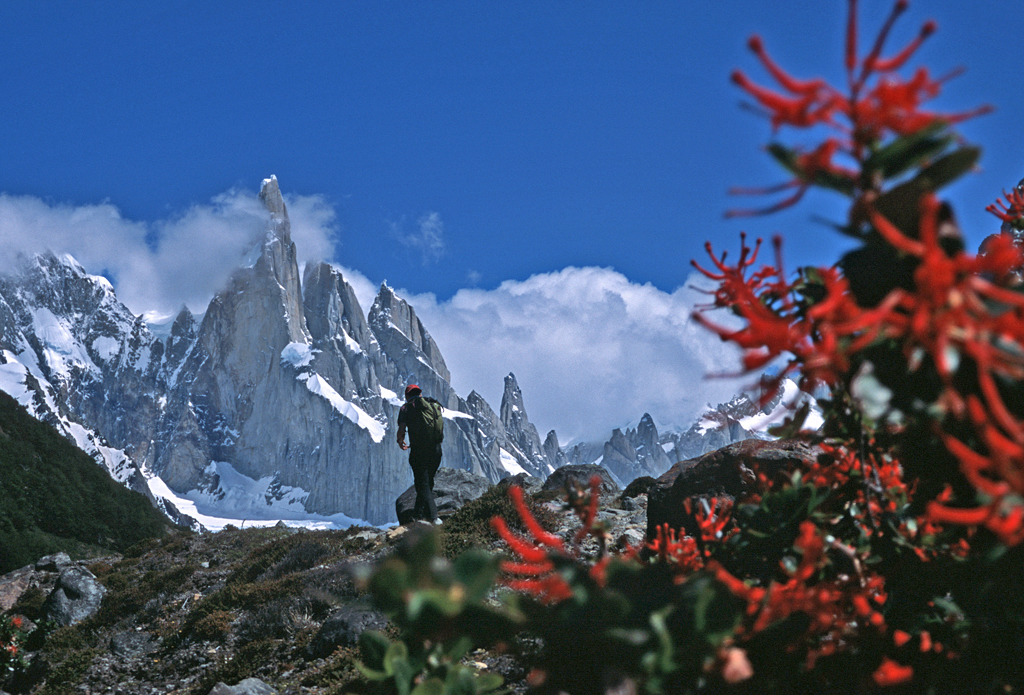
Not a skiing photo, but taken in a great skiing zone.
Ben Ditto hiking in Patagonia.

I’m not into trekking for trekking’s sake, but the trails in Patagonia are an exception as they are so naturally beautiful, well laid-out and have stunning scenery.  In this photo, Ben and I were taking a remedial hike up to Lago Toro a few days after carrying crushing loads down from The Southern Patagonia Ice Cap.  The peak in the background is Cerro Torre and you can get a good idea of what makes it so difficult to climb - the weather moves in from the Pacific Ocean to the west (left) and slams into the towers with high winds, moisture and clouds.  While we were having a nice sunny outing in the valley below, it would be pure misery to be up on the spires on a day like this.  And this isn’t even a very bad day!

________________________________
Help support StraightChuter.com and get 15% off the Patagonia proven Mountain Hardwear Quark Jacket from Backcountry.com! Click the photo below…

Chuting Spree Contest - Rules

Being the excellent company they are, Mike Hattrup and K2 Telemark Skis have donated a pair (any model, any size) of skis to the winner of the first-ever Chuting Spree Contest!

The Basics
Five weekly clues lead to a location of the skis.  Be the first person to correctly identify where the skis are… and they are yours.

How the Contest Works:
Through a series of ski mountaineering related clues, contestants have to guess the location of the skis. The clues start with the continent the skis are located on, then narrow down to a specific location.  The skis are only there in theory - the real ones are waiting for you at the warehouse.

How to Win:
Be the first person to post the correct answer as a comment on the page with the final clue.  Click here for an example.  HINT: First time commenters must be approved, which causes a delay in your comments showing up.  For the fastest comment posting time, get pre-approved by making a comment on an earlier posting so that the computer knows your name. 

Question:  Are there going to be some really hard, stupid, obscure questions?

Answer:    No. Most of them will be easy if you have been following skiing and/or ski mountaineering for a while, and if not, they will be searchable on the Internets. The final clue will be specific to ski mountaineering lore, but it is not necessary to have been there to know the answer.  (Example: In “The Blizzard of Ahhhs” Scot Schmidt stood at the top of this and said “Yeah, I’ll ski it for sure.”)

Rules:

- Tuesday is Cluesday.  All clues will be given on Tuesday mornings at 10:00am Mountain Standard Time on the main page of StraightChuter.com
- In case of a dispute, I (Andrew McLean) will be the sole judge.  I’m the Decider.  I make decisions.
- Immediate family members are not eligible (sorry Mom, Dad, Polly and Mira…)

Prizes:

- Prizes need to be claimed within 90 days of the winning date.  (No, you can’t wait six years for a pair of 2014 Hippie Stinx.)
- Prizes are limited to the sponsors available stock on hand. (Sorry, no custom- made gold-plated Shuksans.)
- Shipping will be at the manufacturer’s discretion.  (FedEx Overnight International Express to Ushuaia is probably not going to happen.)

Sample Contest

Clue #1 (Continent)
Q:  This continent received a record seasonal snowfall in 1998-99.

Clue #2 (State/Country/Province/region)
Q:  The highest peak in this geographic zone is 4207m tall.

Clue #3 (Mountain Range)
Q: Early explorers referred to this range as “The Three Breasts.”

Clue #4 (Specific Peak/Town/Zone)
Q: This peak was first climbed to its summit in 1898.

Clue #5 (Specific location/object)
Q:  The first ski descent of this peak was continuous except for one obstacle.  For a brand new pair of K2 backcountry skis, what is the specific name of this obstacle?

Answer:  Click Here

 
________________________________
Check out the K2 Telemark/AT Ski Collection at Backcountry.com. Click the photo below…


Speed is Safety - Part I

Moving fast in the mountains is a joy.  Heavy camping and hiking has its place, but at the same time, cranking out what is normally a two day trip in six hours is like watching your favorite action film in fast forward.  The scenery and thrills are the same, they just come at you a lot faster.

A classic mountain adage is “Speed is safety.”  This is true as the less time you spend on a lightning prone ridgetop, in avalanche paths or underneath potential ice fall, the less likely you are to get hit.  The flip side is that mistakes happen when you rush.  It’s a fine line between hurry and worry.

Mark Holbrook going from 14,300' to the 20,320' summit of Denali in eight hours with only a day pack.
Mark Holbrook going from 14,300′ to the 20,320′ summit of Denali in eight hours with only a day pack.

The basis of any fast mountain outing is to reduce your pack weight to a minimum.  In climbing, this is known as “A pack, a rack and the shirt on your back.” The skiing version might be “A pack, a snack and there’s nothing you lack.”

Tomorrow:  Basic Speed Concepts

________________________________
Help support StraightChuter.com and get 15% off on the light is right GoLite VO24 Backpack from Backcountry.com! Click the photo below…