Archive for the '04 Partners' Category

Practice Saying Yes

The front of my refigerator is full of Fortune Cookie saying that have yet to come true.  “You will enjoy financial success.”  “You will spend your old age in comfort and material wealth.”  Since these have yet to happen, they are still enjoyable if you append “in bed” to them, at least for a laugh.

But, I did get one fortune cookie that honestly changed my life, which read “Practice Saying Yes.” (in bed…hahhaaa)  I didn’t think much of it at the time, but over the next few hours, I realized that I had been saying “no” to quite a few skiing/adventure offers because of the usual circumstances - job, money, obligations, a sense of responsibility, no time, etc..  With the fortune cookie in mind, I started saying “yes” to offers of adventure/skiing, whether they were as simple as going on an early morning Dawn Patrol or as complex as a month-long trip to foreign lands.  I’ve had a few bad experiences, but by far-and-away, it was the most influential fortune-cookie I’ve ever opened.  One thing leads to another, and before you know it, you are wondering what you were thinking by turning down all of these incredible opportunities.

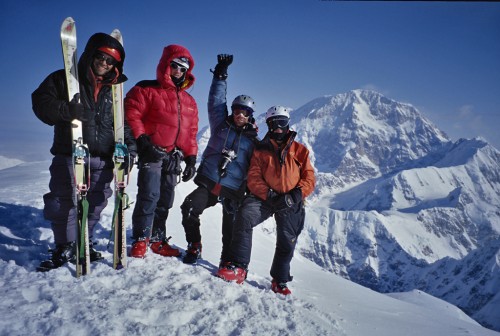
This is not my beautiful house, this is not my beautiful wife.  Self, how did I get here?  By saying "yes" to a thousand smaller trips.  Standing on top of Mt. Hunter, AK with Denali in the background moments before skiing down.
“This is not my beautiful house, this is not my beautiful wife. How did I get here? ” By saying “yes” to a thousand smaller trips. Standing on top of Mt. Hunter, AK with Denali in the background moments before skiing down.

Life continues on whether or not you accept these offers, and as as Woody Allen said “Eighty percent of success is showing up.”  If you are interested in packing in more skiing in, saying “yes” is a great place to start.

________________________________
Help support StraightChuter.com and protect yer noggin’ for future trips with a Black Diamond Tracer Helmet from Backcountry.com! Click on the photo below…


What Makes You a Good Partner - Part III

Continued from yesterday…

Be Flexible
Plans change and stuff happens. If you are goal oriented, you know you will not succeed unless you persevere, but at the same time, group desires and competence should be taken into account. Changing plans to accommodate conditions or abilities can be frustrating, but instead of forcing the issue when things aren’t working out, look at that day’s outing as a reconnaissance mission and consider how you could make a subsequent outing more successful.

Be Considerate
Skiers can be a forgiving crowd, but as the old saying goes, “There are no friends on a powder day.” It is inconsiderate to surprise your partners with an early quitting time, especially after a late start, or to jeopardize the team and your own safety with a solo exit.

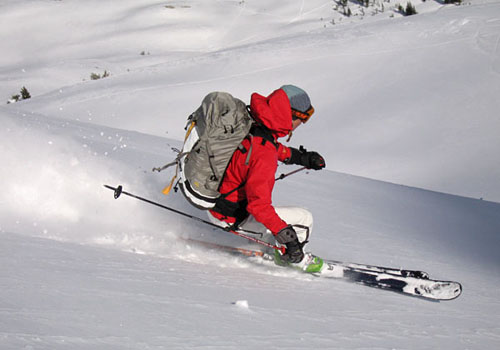
Julia Niles showing considerable consideration on a powder day. 
Julia Niles showing considerable consideration… for a powder day.

Showing up with a gaggle of unanticipated friends drastically alters the group dynamics for the day, especially if a difficult tour is planned. Groups of two to four well-matched skiers are the most efficient size for the backcountry and larger groups can be dangerous, especially if the abilities are unknown.

Breaking trail can be a gut-busting effort and some people thrive on it. If you are not in a position to help out, a simple “thanks” and acknowledgment go a long way toward keeping peace in the backcountry. Trail breaking can also be very slow, with subsequent people having a faster and easier track. As such, it is important to give the trail breakers some distance for avalanche safety reasons, as well as avoiding the sensation of breathing down their neck.
 

________________________
Be on time, every time with a Suunto T6 watch at 15% off from Backcountry.com

What Makes You a Good Partner - Part II

(Continued from yesterday…)

Be Yourself
Everyone has different strengths and weaknesses that he or she brings to a team. Breaking your share of the trail is nice, but no more important than knowing first aid and avalanche safety, or keeping the trailbreaker from bonking with a well-timed cookie. It is not always possible to be the physically strongest person in a group, but often times the strongest person won’t mind doing extra work if she is compensated for it with good company and happy partners.

Knowing your limits and comfort zone is critical, but so is being able to articulate them. The best time to do this is when you are first planning a tour, or at least at the trailhead before you set out. If you have anxieties about a tour, it is better to discuss them beforehand and resolve them when you can do something about them, rather than when you are perched on a peak. If partners have concerns, it is their duty to bring them up before it is too late. If a person is delirious with fear on a steep, icy slope, it is often too late to change plans.

Testosterone and competition play a big part in many male-dominated groups, and group pressures can keep people from expressing their concerns. A classic avalanche accident scenario involves a group of people who feel uneasy with a situation, yet never say anything as they are afraid to look like cowards. There is a fine art to learning to express your concerns before you or the group get into trouble. It might take practice to say things like “I’m not comfortable skiing this slope,” or “I’d like a rope on this section,” but oftentimes it can be surprising how many other people feel the same way.

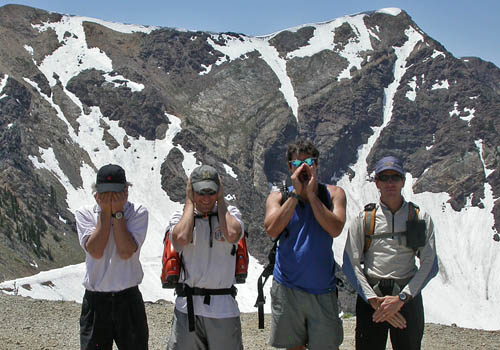
 See no evil, hear no evil, speak no evil... and you might get into trouble skiing.
See no evil, hear no evil, speak no evil… and you might get into trouble skiing. Don’t be afraid to speak up and hold your own.
 
Tomorrow - Part III (final)
 
________________________
Poor communication led to an avalanche burial? Find your partner with a G3 200 Professional Probe with a 15% discount from Backcountry.com


What Makes You a Good Partner - Part I

Being a good ski mountaineering partner is like any other successful partnership - you have to want it to work and make the effort. There are no set rules and it will be different each time you go out with a new partner or group. The ideal is to complement each other’s strengths, weaknesses and personalities, so that the sum of the team’s strength is greater than the individuals. Having a group of highly accomplished skiers is not always a recipe for success, and often turns into a case of too many chiefs and not enough Indians.

“Be prepared.”
- Boy Scouts of America motto
Being prepared is the simplest and most effective way to be a good partner. Showing up on time, having all of your gear together and being ready to go are excellent ways to start a tour. Conversely, being late or forgetting key pieces of equipment can get the day off to such a bad start that it may never recover. Preparations should be completed the night before and double-checked in the morning. Packing food, filling water bottles, finding clothes and organizing gear all take time, and it is better to do those when there are no time constraints. Prepping the night before will give you more time in the morning for a good breakfast or dealing with poor travel conditions.

Be Informed
Being informed can make the difference between an excellent partner and a clueless liability. Even if you are not highly experienced, by being informed you can add information, enlightened opinions or viable options to the team. Knowing the current avalanche conditions and weather forecast is an excellent place to start. If you have a peak or goal in mind, finding out some background information can be invaluable. Two informed heads are better than one when it comes to navigating or route finding in new terrain. By being informed, you are taking an active, rather than a passive role in the group dynamics. An informed opinion is helpful, whereas an uninformed one is contentious.

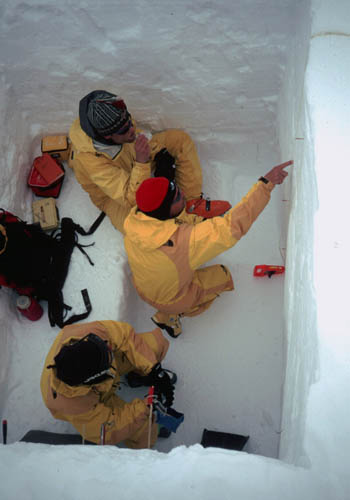
Antarctic Pit
Jon Krakauer, Dan Stone & Conrad Anker getting informed together in Antarctica.
 
Tomorrow - Part II

________________________
Be VERY informed with a Garmin 60 CSX GPS unit at 15% from Backcountry.com

What Makes a Good Partner - Part II

People have a variety of motives and agendas for ski mountaineering that should be taken into account. Making risky descents to impress someone or to shock themselves out of a broken relationship stupor usually leads to poor decisions. When in doubt, start out with some easier warm-up days.

Throughout the day, ski mountaineers ask each other questions that can be useful indicators of a partner’s mindset. Where do you want to go? What did you pack for lunch? Are you bringing a headlamp? There are no dumb questions - they are all signs of a new partner’s level of experience. Having your partner ask if you are wearing a “beeker” (instead of an avalanche beacon) should be a red light. Conversely, if your partners start out on a “mellow tour” with ropes, crampons and ice axes you might want to ask a few more questions. How quickly and efficiently a partner ties a climbing knot says a lot about his level of rope work experience. A potential partner asking absolutely no questions indicates either vast experience or blissful ignorance.

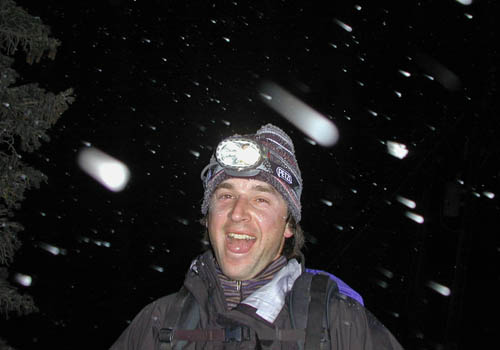
Scott Franklin smilin\' in the dark.
Headlamps - you aren’t going far without them in the dark!  Scott Franklin @ 4:30am.

Many successful ski mountaineering partnerships involve a yin - yang dynamic where one person appears to be the leader and the other provides support. As with musical groups, the leader might get more attention, but without a band or partners there is nothing. Sometimes you lead and sometimes you follow, and it is good to be able to fulfill both roles.

Great partnerships don’t always get off to great starts. If there is a large disparity in abilities or experience, it takes time, effort and commitment on the weaker person’s part to improve, and patience on the other’s to make it work out. Although they take more time in the beginning, partnerships like these can develop into long lasting endeavors if there is a strong common bond. Lack of experience does not mean that a person can’t be a good partner–a willingness to learn, enthusiasm for getting out and setting realistic goals are more important.

Tomorrow - What Makes You a Good Partner
________________________
Does your partner have a headlamp? 15% off Petzl Tikka’s at Backcountry.com

What Makes a Good Partner - Part I

Great partnerships often occur between unlikely people or under unlikely circumstances. Ultimately, a solid partnership has more to do with being compatible and less to do with physical prowess. Skiing ability alone is not an indicator of a solid partner, as ski mountaineering requires such a wide array of knowledge that even a mediocre skier can often make a great partner if they compensate with other expertise. The best ways to find good partners are to ski with a variety of people and keep an open mind. The reality of skiing relationships is that you spend 90% of your time discussing anything but skiing, but when it gets down to business, you want a clear understanding between yourselves. Being on the same wavelength and communicating effectively improves your safety and enjoyment in the mountains.

A good partner should be motivational and fun to be around. While skiing gets most of the credit, it is people who enhance the mountains for us and make trips memorable. A good partner will have goals, ambitions and levels of commitment similar to your own.

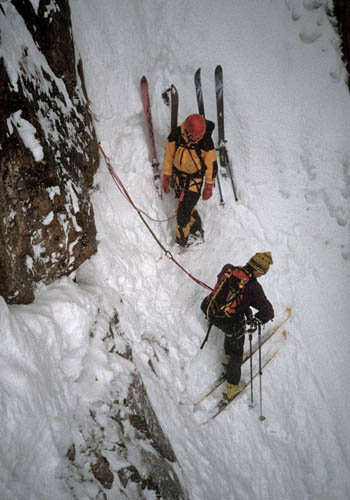
Hans Saari and Alex Lowe heading into the Becky/Chouinard Couloir.

Hans Saari keeping an eye on his partner, Alex Lowe.

Although it might never be articulated, good teamwork is the foundation of a solid partnership. Having complementary skills and interests allows each person to focus on what he or she does best and rely on the other for those things that they do not.

Mutual respect is also an essential part of strong partnerships. You should be willing to do anything that you’d ask a partner to do. Nothing undermines the basic elements of trust like asking someone to cross an avalanche path or ski an icy slope that you would not.

Partnerships created on an informal basis can turn deadly serious within the first hour of the first tour. Before going out, there is usually no discussion of risk tolerance, safety procedures or travel protocol–you just meet someone, strike up a conversation and go skiing. How can you gauge each other’s experience in a short amount of time?

Heavily used equipment is a good indicator, or asking about past skiing experiences and future skiing plans can reveal a person’s history and ambitions. How someone approaches skiing is another indicator. If they start the day with a battle cry of “Greetings from the Land of White Death!” you can assume they have a high tolerance for risk. Conversely, if they are wearing every piece of safety equipment made, they probably have a low tolerance for risk.

Tomorrow - What Makes a Good Partner - Part II

________________________
15% off partner locating Pieps DSP Beacons, at Backcountry.com


Ski Mountaineering Partners - Intro

Superficially, ski mountaineering is an individual sport. You do not need a partner to make turns, enjoy deep powder and appreciate a mountain setting; yet having one transforms the experience into something even greater. Partnerships are at the core of the sport, and without them ski mountaineering would barely exist.

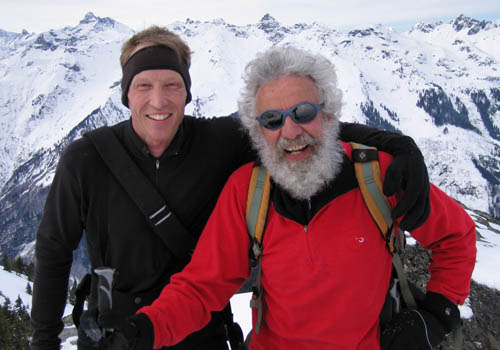
Reto & Hombi from Switzerland
Reto & Hombi from Switzerland.  These guys have been making turns together for years!

Behind any great ski mountaineer, there is a great partnership. Partners motivate each other, provide complementary skills, make breaking trail easier and increase each other’s safety in the mountains. Almost all of the greatest adventures and mountaineering feats in history have either involved, or were the result of strong partnerships. Where you go with your ski mountaineering is closely linked to the partnerships you create along the way.

Finding good partners takes time, effort and persistence. It does not always happen easily, but the rewards last a lifetime. More than money or skill, a strong partnership is your ticket to the most exotic locations on earth. Where there is a partnership with a will, there is an adventure waiting to happen.  Oftentimes you may not even appreciate what a great skiing partner you’ve found until they are no longer around!

Seasoned partners are prized friends and interesting people. After years of skiing together and hundreds of shared experiences, they develop an understanding that borders on mind reading and reduces communications to the bare essentials. Comments like “why don’t you take it and hook under the rock” make perfect sense to a like-minded partner, but could take hours to explain to others. This type of understanding between partners is essential when the going gets tough.

The key to finding good partners is first to be a good one yourself. Partners have an unquestionable responsibility to each other and, consciously or not, people seek out others that they can trust. This sense of trust is the root element of enduring mountaineering friendships and the ideal starting point for new ones.

Tomorrow - What Makes a Good Partner.

________________________
15% off Motorola SX600R radios for keeping track of your partners, at Backcountry.com