A Dawn Patrol trip up the South Ridge of Mt. Superior this morning reminded me of an sobering lesson from 2002.
The first time I ventured up this ridge, I read about it in the local guidebook and brought along a rope and rock climbing equipment. The ridge turned out to be so straightforward and moderate that I never used any gear and subsequently did it many more times with increasingly less and less equipment until it had become a race track. There were plenty of willing partners and the faster we got, the easier it seemed. At one point someone asked how hard it was and I remember saying that it had some exposure, but you’d have to try to hurt yourself if you fell.

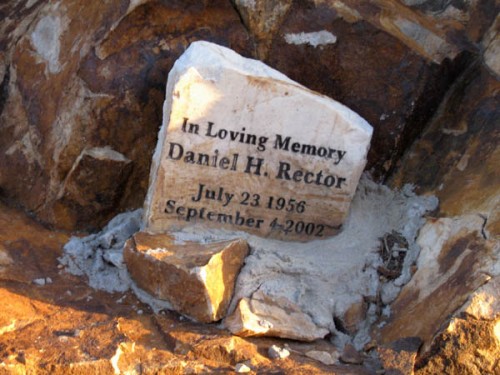
On September 4th, 2002, I was proved wrong on this theory when a close friend, Dan Rector, slipped and fell to his death. Dan was about 100′ feet behind on an exposed ridge just as the sun was coming up when I heard him say “whooah…” and then tumble off the ridge. I’ll never know if it was loose rock, missed handhold or an untied shoelace, but the underlying premise was that we had become inured to the danger and exposure to the point where we considered it safe, easy ground, which in reality it is not.

- Courtney Phillips (followed by Matthew Turley) at the point where Dan fell. It seemed safe at the time.
In terms of skiing, the same thing happens. The longest fall I’ve ever taken took place on a run which I’d skied so many times it seemed boring and I let my guard down. Five-hundred vertical feet later, I was amazed to be alive and had a new perspective on “safe” terrain. More than any single run, it changed the way I ski. The lesson I took away from this is that at times, under-rating moderate terrain can be far more dangerous than being fully engaged when the dangers are obvious.
Any similar experiences?
________________________________
Help support StraightChuter.com and get my lightweight helmet of choice, the Black Diamond Tracer on sale now at Backcountry.com! Click on the photo below…

First Aid and CPR classes are like classic literature—everyone agrees they are great, wonderful and important, yet few people have actually made it all they way through them. Skiers are optimists and the chances of ever actually having to perform CPR or First Aid are remote, which makes it easy to blow the classes off. However, the real importance of CPR and First Aid classes is not so much in learning the mechanics of chest compressions and how to bandage a severed stump, but more that the classes force you to think about emergency situations in advance, so that when accidents do happen, you can provide aid with increased confidence. You’ve seen it before, thought about it, been tested on it and even if you forgot most of it, the increased confidence and calm will be invaluable.
Cardiopulmonary resuscitation (CPR) is most often associated with heart attack victims where it is marginally successful. In terms of ski mountaineering, where CPR really shines is in resuscitating avalanche burial victims and restarting a person’s heart after a lightning strike. Remember, a person is not dead until he is warm and dead and CPR is perfect for these two situations. Don’t give up on them.

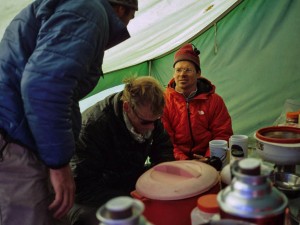
Mark Holbrook wondering what to do about Conrad Anker’s head injuries after a massive avalanche accident. In the end, the wounds were cleaned, bandaged and wrapped. Conrad was able to walk out on his own. Tibet - 1999
When it comes to First Aid in the mountains, one of the best things to know is that you can’t really do much aside from stop the bleeding, make the patient comfortable and know when/if it is safe to transport them. Backcountry appendectomies rarely turn out well and are best left to doctors in operating rooms. The key to backcountry medical emergencies is to not make them worse than they already are.
Backcountry First Aid is a matter of improvising. With all of your ski gear available for splinting and clothes which can be cut up in an emergency, you have almost everything you need to deal with injuries. Along with the knowledge of how to use it, a small First Aid kit with bandages, gauze and the absolute bare essentials is all you really need.
——————————
15% off on 1st Aid Kits from Backcountry.com:
The Adventure Medical Pocket Medic is all I usually carry for a day of backcountry skiing.
For expeditions, I carry something like the Adventure Medical Traveler First Aid Kit.