Archive for the '14 Travel' Category

The Law of Luggage

The Law of Luggage states:

“The amount of gear you carry will expand to fit your luggage.”

This is closely related to the idiom that nature abhors a vacuum - if there is extra space in a pack, duffle bag or sled, it will be filled with extra gear whether you need it or not.  This causes all sorts of problems, including painful (and costly) travel logistics and immobility due to excessive weight. 

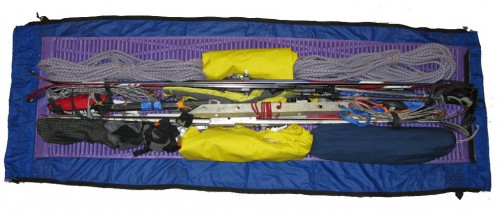
Many tons of the lightest climbing gear on earth.  I don't know why we decided to bring all this, but it made sense at the time.  Mark Holbrook, Katmandu
Many tons of the lightest climbing gear on earth. I don’t know why we decided to bring all this, but it made sense at the time. Mark Holbrook, Katmandu

The Law of Luggage applies to day packs as well as expedition duffle bags.  For backcountry skiing day trips, the best way to lighten your load and increase your mileage is to start with a small pack so you just can’t carry much to begin with.  For expeditions, especially with the new fifty pound per bag weight restrictions, those sexy oversized expedition duffles will be your worst enemy by the time you stuff them full of 110 pounds of gear, not to mention the duffle weighing eight pounds itself.  You won’t be going very far or very fast if you have to carry two of those behemoths. The fifty pound limit is actually a blessing in disguise as it encourages a tighter, lighter gear selection, which in turn means you can get by with a smaller sized duffle.

________________________________
Help support StraightChuter.com and get a MEDIUM SIZED Mountain Hardwear Expedition Duffle Bag from Backcountry.com! Click on the photo below…


Freezer Bag Cooking

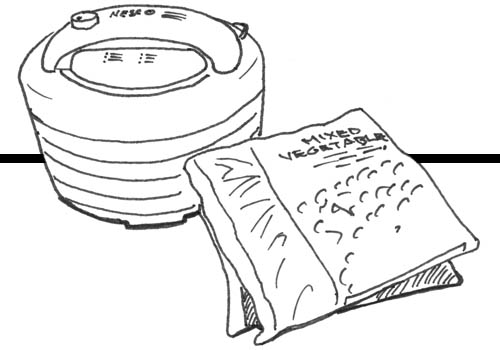
I saw a reference to “Freezer Bag Cooking” on a Divas Gone Arctic trip report by Kellie Okonek and checked it out as I’m always looking for new expedition food ideas.  The concept is pretty simple; combine a bunch of ingredients into a freezer bag, use a beefy marker to describe what it is, then when you are ready to eat, dump boiling water into the bag, let it sit, then eat it.  I’ve been doing a variation on this for a few years, but usually end up cooking it in a pot instead of a bag as things like undercooked pasta will rip your guts apart.

Partially rehydrated freeze-dried food and one-piece ski suits lead to couloir names like Intestinal Fortitude.
Partially rehydrated freeze-dried food and one-piece ski suits lead to couloir names like “Intestinal Fortitude.”

The cool thing about Freezer Bag Cooking is that it is both a website and a book with tons of recipes, which is the crux for most male ski mountaineers where the default is Top Ramen and bloatmeal.  The book, Freezer Bag Cooking - Trail Food Made Simple” by Sarah Svien Kirkconnell, has recipes for breakfast, lunch and dinner, as well as drinks and snacks.  I like the idea of making and bringing my own food on trips as you know what you are going to get, it is cheaper, you know how big the portions are, and by breaking it down into separate meals or days, you can easily see how much you have left, or pull a package out for a summit attempt.

http://www.freezerbagcooking.com/fbcstore.htm
So simple even a bachelor could do it…

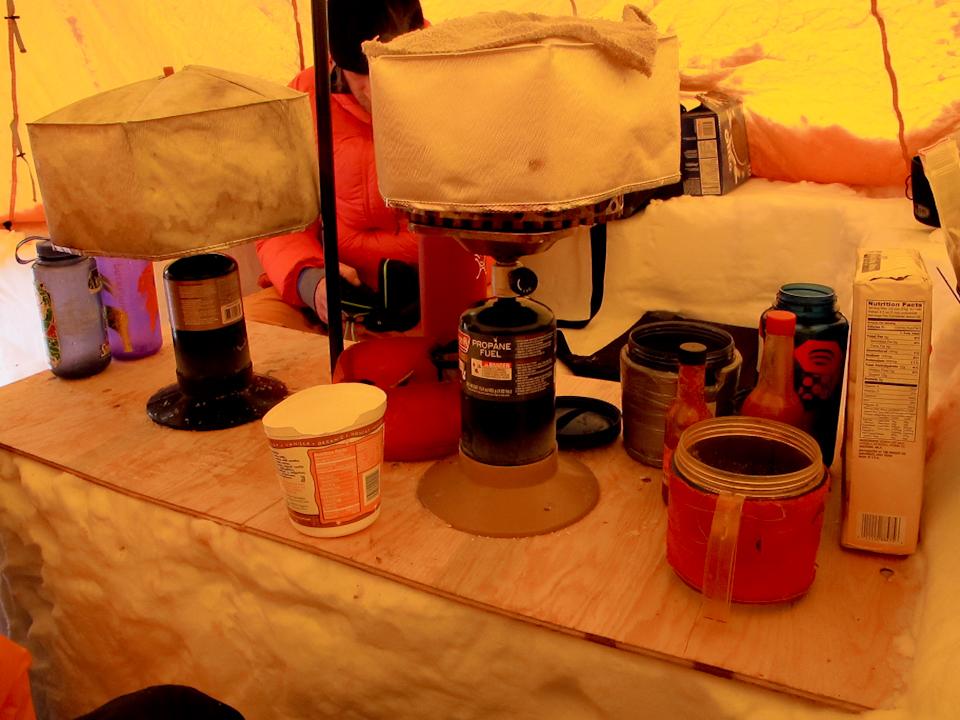
For winter camping, I like to tuck the warming pouch (or pot in my case) into a sleeping bag or zip it up next to me inside a down jacket to help conserve the warmth.

________________________________
Help support StraightChuter.com and get your flame on with a MSR XGK EX Stove from Backcountry.com! Click on the photo below…

Airfare Paradox of Choice

One of the most influential books I’ve read in the last five years has been “The Paradox of Choice” by Barry Schwartz.  This isn’t to say it is a rip-roaring good read, but I think about it almost every day, especially when faced with the endless morass of choices while trying to find the best deal on an airline ticket. 

The premise is simple: you would think that with more choices, people would be happier, but it is just the opposite.  As a case study, when a jelly company offered three sample flavors, people tried one or two, and then ended up buying one.  When they offered twenty-four samples, instead of trying and buying more, people were so overwhelmed with choices that they blew off the entire sampling and bought nothing.

This is where expedition airfare purchases come in.  There’s an overwhelming amount of choices to be had with endless mixtures of schedules, arrival and departure times, cost, duration, discounts, penalties, etc..  Personally, I hate it, as it is hard to know if you are really getting a good deal, especially when your cheap airline carrier charges extra for each bag, then loses them.

Mike Libecki paying the airfare paradox of choice layover penalty somewhere in
Lost in America. Mike Libecki paying the cheap airfare penalty in somewhere in the midwest.

As the “Paradox of Choice” outlines, people tend to be Optimizers or Satisfiers.  Optimizers will spend an inordinate amount of time making sure they got the absolute best deal, and then be crushed if they find something even slightly better afterwards.  Satisfiers on the other hand spend a set amount of time shopping for an item, make a purchase and then don’t look back.  This is what I try to do with airline tickets - dedicate an hour to it, make a choice, then move-on.org and don’t worry about it.  It’s the price of having fun.

________________________________
Help support StraightChuter.com and get the ultimate travel organizer bag, the Mountain Hardwear Memo Bag on sale now for 40% off at Backcountry.com! Click on the photo below…
 

Death by 1,000 Ounces

It is easier to ruin a trip by having too much gear rather than too little.  The issue with too much gear is weight, and too much weight means reduced mobility.  As Ray Jardine, the master of ultralight backpacking says “If you need something and you don’t have it, then you don’t need it.”  This may be pretzel logic, but it is the thought that counts.  At best, cold-weather ski mountaineering is a heavy prospect, so don’t make it worse than it already is.

How much is too much?  It depends, but if you are packing for a trip find yourself thinking “Oh, this doesn’t weigh too much… I’ll just bring it.” you can probably do without it.

 Ben Ditto preparing for pain in Patagonia.
Ben Ditto (140 lbs) with a 100 lb pack on the Southern Patagonia Ice Cap.  Pure misery.

_______________________________________________________

Lightweight gear from Backcountry.com at 15% off:

The ultimate stuff sack - light, durable and it works.


At .5 ounces, this titanium spork will make you very, very sexy…

High Stakes Tent Anchors

Getting your tent shredded by wind or snow is an educational experience you only need to do once to appreciate how bad it is.  They don’t just kind of explode, but go in a chain reaction of snapping poles and ripping fabric which leaves you wrapped in a cocoon of nylon and sharp aluminum pole ends.  Fun!

Most good quality tents can take very high winds if they are secured properly, which can be problematic in soft snow.  A good trick is to use those worthless looking little stakes which often come with tents, but instead of driving them in like nails, bury them as mini deadman anchors and attach them to the tent with a length of accessory cord.

Ingredients:

6-10 eight-inch aluminum tent stakes
6-10 forty-eight inch lengths of 3mm accessory cord.

Tie the cord into loops with a Fisherman’s knot.


Girth hitch the accessory cord loops to the tent loops.  I usually leave them on the tent.

 Girth Hitch to tent end.

Girth hitch the other end of the accessory cord to the tent stake.


 Girth hitch the stake...

The finished anchor looks like this:

 The assembled tent anchor.

Set the tent up, pull the anchor taut, note where the stake is in the snow, dig a hole with your shovel at that point, then cut a slot for the accessory cord, place the stake down in the hole, bury it, then stomp the snow down around it.  After a few hours, the snow should set up and the anchors will become bomber.

 The finished work of art...

As an added bonus, these anchors are fairly easy to dig out afterwards and the accessory cord can take direct hits from a shovel.  If it gets cut, just tie it back together. The aluminum stakes are also good if you happen to be on firm, dry ground where you can pound them in.

 Here’s a little video of a tent withstanding a 45-knot storm using this type of anchor. 


__________________________
Tents & stakes from Backcountry.com at 15% off:

Simple, lightweight, durable.  Nothing fancy, it just gets the job done.

The ultimate beefy tent to go with your beef anchors…


One for the Road

One of my favorite pieces of travel advice came from a hokey little magazine article about family road trips, but the advice is applicable to ski mountaineering trips or expeditions as well. The basic idea is to force yourself (and your partners) to spend one minute of contemplation before you take off going through a list of things you need to bring. Skisbootspoleshatglovesgogglesmoneydrugsfood?

Prepping for a trip always takes longer than expected and often ends with a last second dash for the car, squealing wheels and a mad rush out the door. It is only when you are twenty minutes down the road that you remember that your wallet/boots/jacket are right where you left them… safely back at the house.

Now you have to turn around, go all the way back, then back again, which makes you REALLY late.

The trick is to nip the panicked exit before it begins, which is right as the car key is heading for the ignition. Put the key down, look at the clock and force yourself to think for a full minute before you begin. The minute you spend could save you hours afterwards.

_________________________
Click the bag for 15% off from Backcountry.com on a burly MHW duffle.